News
Gear Up for Gleaning Season!
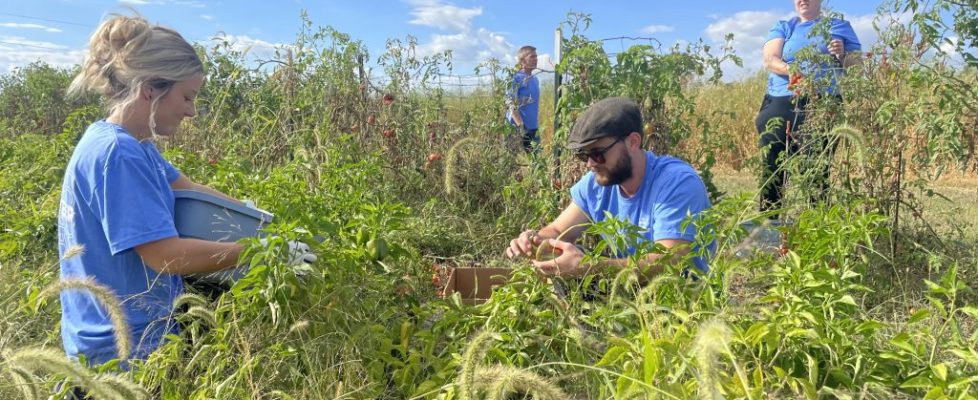
What exactly does gleaning mean – no not cleaning…gleaning! If you’re unfamiliar with this weird word, don’t worry, you’re not alone. Gleaning is an age-old practice that helps provide fresh local foods to the community, so let’s dive in!
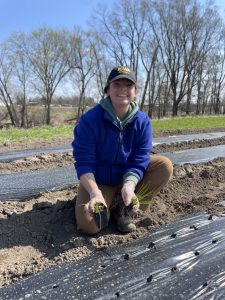
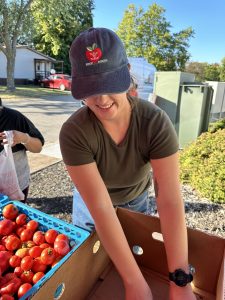
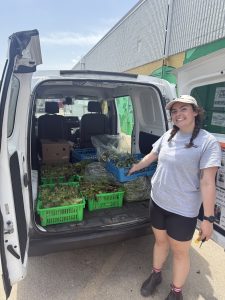
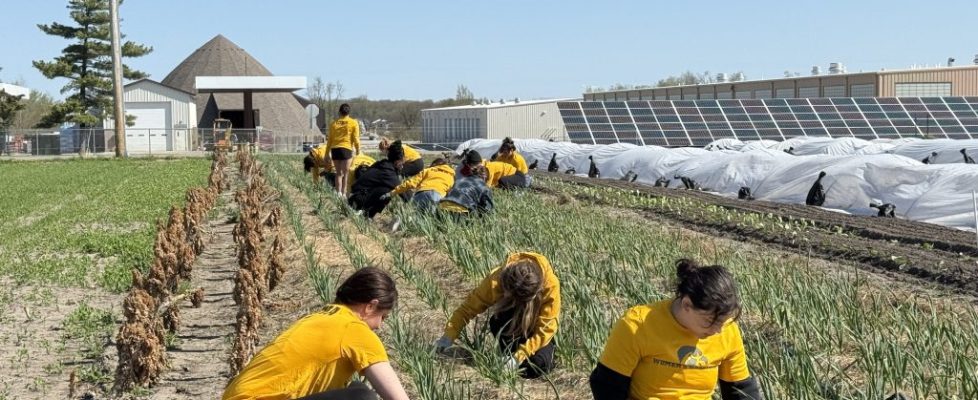
“The term gleaning is used in the agriculture industry to describe the collection of crops left in the field after all other available food has been harvested” (PostHarvest). The practice dates back centuries but is still largely relevant in modern day farming. At Table to Table, we implement gleaning into our food rescue system to provide fresh local foods for Johnson County’s food access network. Local farmers and individuals with large personal gardens reach out to us when they’ve reached their capacity for harvesting and still have good crops left in the fields. This can happen for many reasons – sometimes there is not enough people-power to harvest everything, farmers may have over-planted in case of blight, drought, or pest problems, or they may have planted cover crops to protect against erosion with no intention of harvesting them in the first place! Whatever the reason may be for excess crop, gleaning is a great way to ensure the resources used in producing the food are not wasted while getting fresh food on local tables at the same time (PostHarvest).
Want to get involved?
- Volunteer with Table to Table (T2T)!
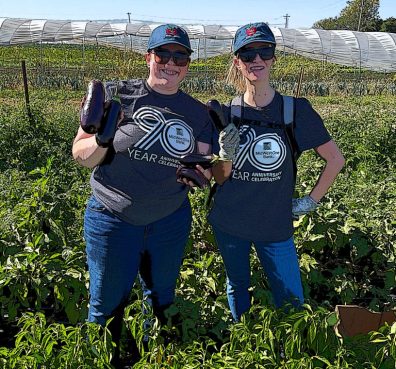
- We’re gearing up for prime gleaning season and could use all the help we can get! Contact volunteer@table2table.org for more information on becoming a gleaning volunteer. Gleans usually take place in the morning and last around two hours. It’s a great way to get outdoors, learn more about local foods, and get your hands dirty!
- Grow a row!
- Are you an avid gardener? Got a green thumb? Just like to plant things? Plant an extra row of produce of your choosing in your personal garden or community plot to donate, and when it’s ready for harvest, bring your produce to T2T or other food access organizations in the community! For more information on this, contact gleaning@table2table.org.
- Donate produce to Table to Table!
- Are you a local grower with extra produce in your fields or garden? Connect with T2T to discuss potential gleaning opportunities! We’ll send a crew of volunteers to harvest your extra produce and deliver to food insecure neighbors. Contact gleaning@table2table.org for more information.
Just in Time, One Box at a Time
How our food rescue model sets the tone for an exceptional food access network, one of the best in the state.
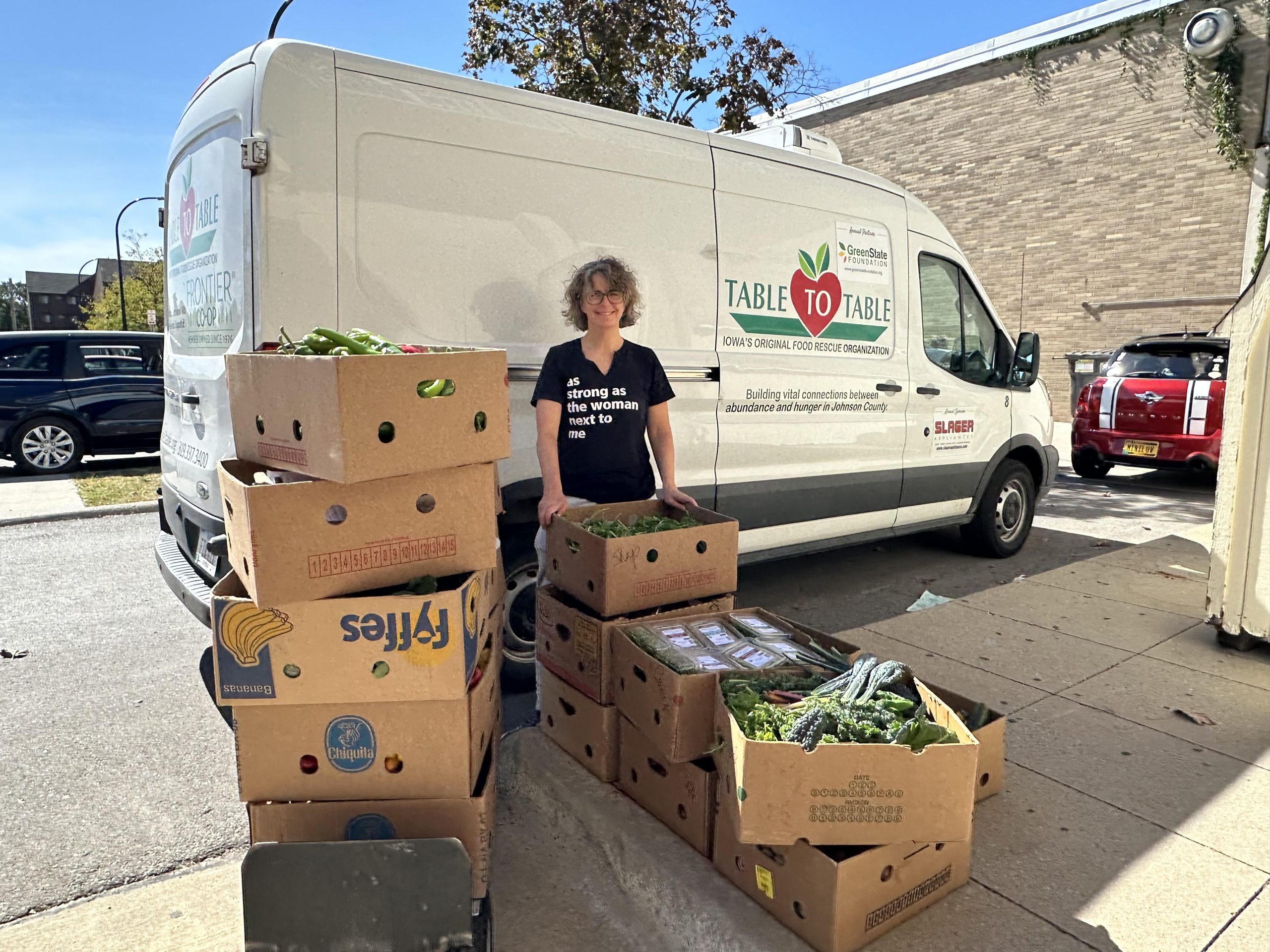
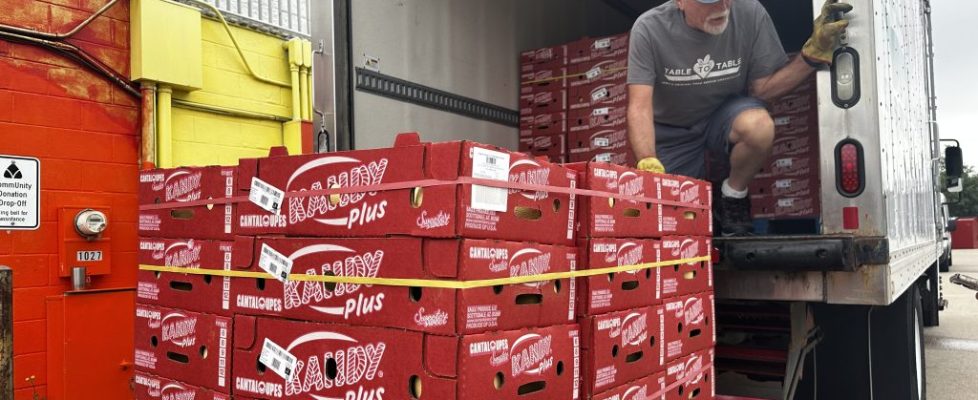
Every day at Table to Table, we adapt to the unpredictability of food rescue. We’ve built a system that’s flexible enough to meet the unique needs of our neighbors. At the heart of that system is something surprisingly simple: the humble banana box—absolutely central to our mission.

Most of the food recovery work in the US is done in two models: a model relying on huge trucks and paid staff to pick up pre-packed pallets and deliver them to a warehouse for distribution days later or a model where pantries send their own staff or volunteers to the store to collect whatever food is available that day.
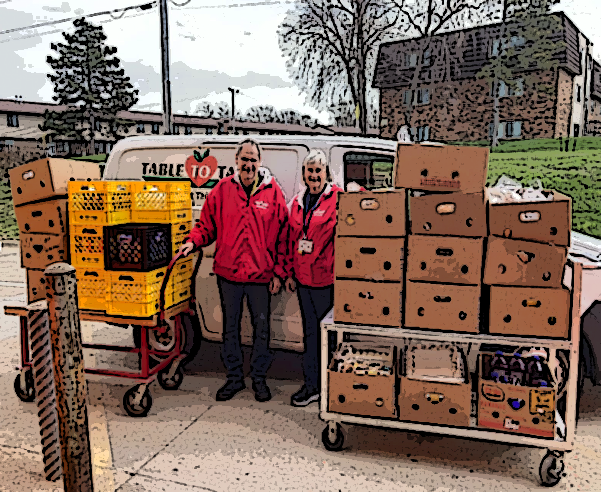
Table to Table is one of the few organizations across the country that uses a route based model, and the banana box is a key part of that process. Volunteers go into a food donor store and collect the donations directly from staff. They cart it out, pack it by type into 20 or more banana boxes, and deliver it directly to food access partner, like a food pantry.
With this model we prioritize dignity, supporting our belief that both people and food have inherent value. At a partner meeting just this week, folks reported that most of the food we deliver in a day is gone within 3 hours, so we know our neighbors get food to their tables as fresh as possible. When we pack food by hand, inspecting items for quality, we’re not just moving food—we’re ensuring it’s good food, worthy of the people we serve.
And our model supports equity, too. Food recovery is unpredictable. Some days a store might only have a few boxes of bread. Other days, there might be hundreds of pounds of strawberries. In a one-store-to-one-pantry model, that can be a challenge. What if a pantry doesn’t have enough patrons for all those strawberries? What if the store has nothing that day? Our volunteers visit multiple stores, and split the food into smaller manageable boxes by food type. This allows us to redistribute resources more fairly and address needs of different communities. We can make sure those strawberries are delivered to both a Head Start program and a pantry. We can also pick up and combine several small donations to create a meaningful delivery.
The banana box allows us to respond in real time, to build equity into the system with every stop.

Our volunteers aren’t just box packers. They’re relationship builders. They know the names of dairy managers and produce clerks. They handle each item that goes into a box. They check in when donations are low and thank donors in person. That daily presence makes a difference—this is why stores in Johnson County donate more food collectively than those in comparable communities.
When a volunteer delivers boxes to a partner, they’re not just unloading and leaving. They’re asking, “What do you need today?” They’re listening and noticing change. Then they’re reporting back, so we can adjust. This kind of real-time collaboration simply isn’t possible in a top-down distribution system. But when you’re handing a box of food directly to a recipient partner? You build trust. You stay connected.
Last year, volunteers distributed 2.7 million pounds of food. They packed more than 1,000 boxes a week, 52,000 boxes in a year. Volunteers are the reason we can respond quickly and distribute quality food equitably. You can join us. Whether by volunteering, donating, advocating, or simply sharing our story, you are a part of this network.
None of this would be possible without our community. We’re holding steady, because we’ve built a model rooted in adaptability and powered by people. But we also know that the road ahead won’t be easy. State and federal policies are shifting. Food insecurity is becoming more complex. And yet—we’re still here.
So, when folks ask me how we are going to meet this moment? My answer is: We will do it together and we will do it one banana box at a time.
In hope & solidarity, Nicki Ross -Executive Director
Donate Easily Online
Effects of Federal & State Policy Changes and How Can You Help?
We’ve heard you ask: “How is Table to Table faring under the changes happening at the federal and state level?” and “What can we do to help?”
Proposed cuts to federal poverty relief programs like SNAP and Medicaid will impact our neighbors’ ability to meet their basic needs.
USDA foods accounted for 17% of all the food distributed by pantries in Johnson County last year. Cuts to funding for a quarter of this food have been announced. The remaining is funded in the farm bill, but we’ve seen other congressionally funded programs axed.

~ Follow and subscribe to the Iowa Hunger Coalition to better understand the direct impacts on our neighbors. Use your voice to promote the importance of programs like USDA TEFAP, now, before we see those proposed cuts come to fruition. Read more about where state and federal legislation related to poverty/food insecurity are now in this letter from Luke Elzinga, chair of the Iowa Hunger Coalition.
T2T recently lost funding for all of our seasonal AmeriCorps roles. These members lead our seasonal local foods programs including managing over 30 farm partnerships and recovering 10% of the fresh produce we deliver.
~ Volunteer with us. We need you now more than ever. email volunteer@table2table.org to find out the many ways we can use your help.
Our partners are facing significant funding cuts for key life saving services that can’t be replaced by community funding alone. The most recent budget proposal guts HUD’s affordable housing, homelessness, and community development funding. These programs directly fund shelter/housing services and also support local funding to 20+ community agencies including Table to Table.
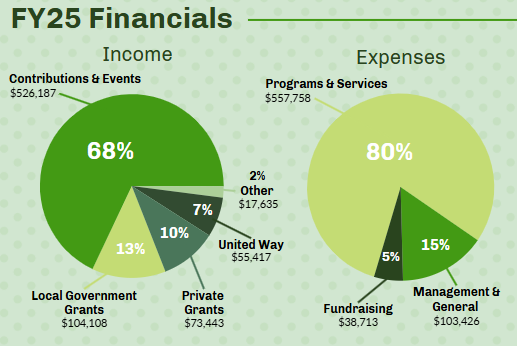
~ Consider increasing your gift or signing up for a monthly recurring gift. You are our lifeline —60% of our funding comes directly from individuals and local business contributions.
Donate Easily Online
Food Rescue = Climate Change
When good food ends up in the landfill, not only does the food go to waste, but every resource that went into producing, processing, transporting, and storing it is wasted as well. Each step in the food production process, including disposal when it goes unbought from stores, produces harmful emissions. Food waste ultimately accounts for 8-10% of global greenhouse gas emissions each year. Food rescue aims to reduce harmful greenhouse gas emissions by using food for its intended purpose – to be eaten. So far in FY25, T2T has rescued 2.2 million lbs. of food – that’s equivalent to nearly 2 millions meals provided. 
*Figures calculated with the ReFed Insight Engine Impact Calculator
Food Rescue Beyond the (Banana) Box!
Table to Table’s Food Transportation Rescue program aims to capture good food that may go to waste as a result of being rejected by local food vendors. This can happen for any number of reasons and often has nothing to do with its quality – damaged packaging, mislabeled items, or simply too much of a product are all common reasons that vendors reject shipments even though it’s still perfectly good food. The past two years, T2T staff and volunteers have worked hard to develop this program, maintaining 17 partnerships with food transportation companies and warehouses, and successfully recovering nearly 140,000 lbs. of good food through rejected truckloads. To promote the program, AmeriCorps and volunteers designed and posted flyers in food warehouse porta potties, which has been our most successful outreach effort to date – call that creative marketing!!
Food Rescue Tales
In November we received 35,000 lbs. of distilled water that had been rejected due to 1 damaged jug. Not only can distilled water be drank, but it can be used for medical and cleaning purposes as well – a super unique offering that our partners were thrilled to receive!
This March, we happily accepted a 2,030 lb. donation of milk that was rejected due to a few leaky cartons. Luckily, T2T Dispatcher Ryan Mohwinkle recruited their visiting siblings to help us clean off each carton and distribute them to our partners!
Why Local Foods Matter
Did that apple you’re eating come from five miles down the road, or is it more well-traveled than you are? Reduce your carbon footprint and benefit your health by choosing local food.
Monthly Topic Overview
Why does choosing local food matter?
“Choosing local food whenever in season and when possible, as often as possible, strengthens a community-based food system,” says Michelle Kenyon, director of Field to Family, an Iowa City-based nonprofit that works to create a healthy and sustainable local food system. “Community food systems enhance the health of our economy, environment, and our population.”
Let’s go in-depth with benefits:
- Choosing local food reduces transportation-associated greenhouse gas emissions.
- Significant greenhouse gas emissions are associated with food logistics. Most conventional food travels over 1,000 miles to get to us, the consumers. (To put that into perspective, that’s like driving to Boston from Iowa City.) Almost one-fifth of carbon emissions in the food system are from burning fossil fuels to transport (and refrigerate) food via trucks, trains, boats, planes, etc. With a greater distance to travel, there’s also a higher chance of food spoiling or being damaged on its journey, leading to more food waste.
- Choosing local food offers fresher, more nutritious options that benefit your health.
- Food sourced locally spends much less time in transit from the farm to your plate, which means it loses fewer nutrients before you eat it. Plus, it’s fresher and tastes better. Eating local encourages you to eat with the seasons, learning when certain types of produce are at their peak for quality and taste.
- Plus, many local farmers take environmental health into consideration when growing food, using sustainable practices to increase biodiversity and protect pollinators.
- “‘Know your farmer, know your food’ is absolutely true, as local farmers are transparent when it comes to their growing philosophies,” Kenyon says. “Those who implement growing practices that are committed to improving soil, water, and air health are upfront about it.”
- Choosing local food strengthens our food system.
- When you purchase local food, you’re supporting local farming, processing, and distribution jobs, keeping your dollars in our local economy. The more of our local dollars that go into local food, the more local food is grown in our region. Those dollars invest in the future of our food supply.
- In addition to food, agritourism supports our community’s economy. Participating in local activities like farm to table dinners, goat yoga, and apple picking ultimately support folks living and working in our communities.
How can I access local food in Johnson County?
Now that you understand the difference that eating local can make, let’s delve into how you can access local foods in Johnson County. Our community is host to a lot of quality local food options, including these listed:
- Farmers Markets offer seasonal local foods and goods sold by our neighbors. Markets typically run May-October. Check out this list of Johnson County Farmers Markets.
- If you’re looking to order local foods online, Field to Family offers an Online Market from April thru December.
- Many local farms offer community-supported agriculture (CSA) shares for purchase. Vegetable shares are seasonal and subscription-based. Find a local CSA with this guide to Iowa CSA farms.
- Want to grow your own produce? You can’t get more local than that!
- Try your hand at gardening in your backyard; or, if your space is limited, container gardens kept on patios, steps, or in windows are excellent for growing your own tomatoes, peppers, eggplants, lettuces, strawberries, and herbs.
- Iowa City community garden plots are another great option for planting your own garden or gardening with friends.
- Plus: share your bounty and grow an extra row to donate to Table to Table! Drop your donations off at the Table to Table office in Pepperwood Plaza, 1049 US-6 E, Iowa City on weekdays or Saturday mornings.
- Shop local at the grocery store. Wherever you shop, check labels when you’re shopping to see where the food you’re planning to purchase came from.
Activity
- Learn about how you can access local food in our area with Field to Family’s resources.
- Next time you go to the grocery store, pick out three produce items and check the labels. Where are the items from? Are they local or from a faraway place?
Resources
- Field to Family resources:
- List of Johnson County Farmers Markets
- Guide to Iowa CSA Farms
- Container Gardening Tips
- Iowa City Community Garden Plots
- Iowa State University’s Vegetable Planting and Harvesting Times
More on local food benefits from Iowa State University
Now Hiring: Part-time Donor Relations Manager or Coordinator
Position & Ideal Candidate Overview:
Table to Table is posting this part-time position at two levels in the hopes of filling a single position with a person who is a good fit for the role while also aligning the candidate’s experience with the position responsibilities and title. The level of responsibility in leading, developing, and meeting fundraising metrics independently is different depending on the experience level. Pay and hours would also be adjusted accordingly.
The Donor Relations and grant support position supports the financial health of the organization. A dynamic, creative, and organized fundraising leader, you will help a mission-driven nonprofit thrive and grow. This position will play a critical role in the fundraising and donor stewardship for Table to Table. We are looking for an outstanding communicator and a community-minded individual who is passionate and enthusiastic about conveying our mission to inspire financial support from organizations and individuals. The ideal candidate is organized, self-motivated, and has a great attitude to contribute to the positive strengths-based culture at T2T. The right candidate is patient and persistent with a successful track record in sales or marketing. As this is a public-facing role, we’re looking for a “people person” who is tactful and enjoys interacting with those of diverse ages, abilities, and backgrounds. If you have these qualifications and want to put your time and energy toward feeding thousands of people in our community, this is the job for you!
The candidate at the Donor Relations Manager level will be responsible for managing and cultivating relationships with current and prospective donors in the areas of major gifts and corporate sponsorships with the goal of increasing fundraising revenue and donor engagement and retention. Tactics include implementing an expanded program for donor engagement, cultivation, recognition, and stewardship through supporting increased personalized communication with past, current and prospective donors, from both household and business sectors through personal visits and communications. Their role in grant researching and writing coincides with corporate donor development and will play a crucial role in identifying new funding opportunities and crafting compelling grant proposals to secure financial support for our organization’s programs and initiatives. This position requires a proactive individual with excellent research, writing, and organizational skills who can effectively communicate our mission and goals to potential funders.
A candidate at the Donor Relations Coordinator level supports the development and fundraising efforts at Table to Table through donor engagement, relationship-building, and grant coordination activities. A creative and detail-oriented team member, this position helps carry out the organization’s donor stewardship and revenue generation strategies. The Donor Relations Coordinator will assist with outreach to current and prospective donors, focusing on donor engagement, stewardship, and cultivation. This includes personalized communication, meeting preparation, event support, and data entry. The role also includes supporting grant research and assisting with writing and submitting grant applications for corporate funders.
Employment Status and Work Hours: (Part-time position)
One day per week in office during a time that aligns with organization needs and flexible work from home options for other work hours as long as position metrics are being met. This position travels within Eastern Iowa for donor engagement activities.
Pay & Benefits:
Donor Relations Manager: Up to 20 hours per week, $29 – $34 an hour commensurate to experience
Donor Relations Coordinator: Up to 30 hours per week, $23 – $26 an hour commensurate to experience
Benefit package includes sick leave, employer retirement contribution once eligibility requirements have been met.
Position Goals and Metrics:
The Donor Relations Manger will focus on these four primary objectives:
- Increase income from household donors and secure sponsorships/business support.
- Develop and implement a donor relations plan to increase donor retention and identify next steps in moves management
- Complete and submit corporate partner grant applications by deadlines. Track, document, and complete deliverables including reporting as needed.
- Manage ongoing donor cultivation strategies
Revenue goals for the position align with the strategic plan and will be revised annually to align with the capacity and cost of the position.
The Donor Relations Coordinator will focus on the following key objectives:
- Support donor engagement and communication to help increase donor retention and household giving.
- Assist in implementing a donor relations plan that aligns with strategic goals.
- Complete and submit corporate partner grant applications by deadlines. Track, document, and complete deliverables including reporting as needed.
- Contribute to stewardship activities and lead donor recognition efforts.
Revenue goals for the position align with the strategic plan and will be revised annually to align with the capacity and experience level of the position.
Donor Relations Manager Qualifications and Competencies:
- A passion for Table to Table’s mission to bridge the gap between abundance and hunger to increase food equity and reduce environmental harm by collecting and redistributing surplus food through partners to people who can use it..
- Five years of fundraising, sales, marketing or communications experience with knowledge of fundraising principles and best practices preferred.
- Previous experience with nonprofits, fundraising, development and special events is preferred.
- Previous or current membership to a professional fundraising or sales association a plus
- Experience in grant research and proposal writing, preferably in a nonprofit setting.
- Strong communications and interpersonal skills.
- Exceptional project management, organizational and time management skills, with an ability to prioritize and manage multiple projects simultaneously, seeing projects to completion on deadline.
- Must be able to write clear, high-level, accurate and compelling copy for solicitation material, communications with donors, etc.
- Creativity as well as analytical ability to maximize program outcomes and track for strategic and process improvements.
- Excellent public speaking and presentation skills for the purpose of promoting Table to Table’s mission. Ability to connect with others and forge strong relationships.
- High ethical standards, discretion, and confidentiality in working with donor information.
- Familiarity with the Johnson County business and nonprofit community preferred.
- Ability to work well within a diverse team and across departments.
Donor Relations Coordinator Qualifications and Competencies:
- A passion for Table to Table’s mission to bridge the gap between abundance and hunger to increase food equity and reduce environmental harm by collecting and redistributing surplus food through partners to people who can use it.
- Minimum of 1 years of experience in fundraising, sales, marketing & communications, donor relations, or nonprofit administration preferred.
- Some experience in grant research or writing in a nonprofit or related setting is a plus.
- Strong communication and interpersonal skills.
- Organized, detail-oriented, able to manage multiple tasks simultaneously, and prioritize with guidance.
- Ability to write clearly and effectively for donor communications and basic proposals.
- Comfort engaging with donors and community members in person and by phone or email.
- Exceptional project management, organizational and time management skills, with an ability to prioritize and manage multiple projects simultaneously, seeing projects to completion on deadline.
- Excellent public speaking and presentation skills for the purpose of promoting Table to Table’s mission. Ability to connect with others and forge strong relationships.
- High ethical standards, discretion, and confidentiality in working with donor information.
- Familiarity with the Johnson County business and nonprofit community preferred.
- Ability to work well within a diverse team and across departments.
Necessary Skills and Requirements
- Valid driver’s license and good driving record.
- Excellent public speaking, presentation, and writing skills for the purpose of recruiting volunteers, fundraising, and promoting Table to Table’s mission. Ability to connect with others and forge strong relationships.
Review the complete and differentiated job descriptions below:
Donor Relations Manager Job Description 2025
Donor Relations Coordinator Job Description 2025
To apply, email a resume and cover letter to hr@table2table.org
Celebrate Food Waste Prevention Week With Us!!!
This month, we are partnering with Food Waste Prevention Week, happening April 7-13, 2025, to shine light on the importance of food waste reduction and to share some easy tips on how you can reduce food waste.
The party continues through all of April as we celebrate our Love Food, Fight Waste program’s three year anniversary this month! Celebrate with us by taking action to reduce food waste.
Here are some ways to make a difference:
-
- Take our 10 Actions Challenge which offers a range of activities to participate in. Compete with your friend, family member, or neighbor this month and see who can score the most points. Click here for a link to the scorecard.
- Get prepared for this year’s local produce season:
-
- Farmers markets offer seasonal local foods and goods sold by our neighbors. Markets typically run May-October. Check out this list of Johnson County Farmers Markets.
- If you’re looking to order local foods online, Field to Family offers an online farmers market.
- Many local farms offer community-supported agriculture (CSA) shares for purchase. Vegetable shares are seasonal and subscription-based. Find a local CSA with this guide to Iowa CSA farms.
- Want to grow your own produce? You can’t get more local than that!
- Try your hand at gardening in your backyard; or, if your space is limited, container gardens kept on patios, steps, or in windows are excellent for growing your own tomatoes, peppers, eggplants, lettuces, strawberries, and herbs.
- Share your bounty and grow an extra row to donate to Table to Table! Drop your donations off at the Table to Table office in Pepperwood Plaza, 1049 US-6 E, Iowa City on weekdays or Saturday mornings.
- Get involved with your community! Volunteer or donate to the organizations who are reducing hunger through food rescue.
- Educate yourself on local volunteer opportunities or consider donating food and personal care items. Here are just a few wish lists from some of our partner organizations:
You may also bring items to Table to Table to be delivered throughout the local hunger relief network!

![Picture of Jon Feaver T2T volunteer for 7 years, quote: “I can’t save the world but rescuing food is something tangible I can do to help that makes a big impact across the community.” Picture of Jim and Laurie Cubit T2T volunteers for 3 years, quote: “With Table to Table you know the food you’re rescuing is going to make it into homes within a matter of hours. Being able to make a difference that quickly is a wonderful thing.” Picture of Dina Janzen T2T volunteer for 17 years, quote: “[As a big truck volunteer] I get to move 10,000 pounds of food at a time! I can’t believe how I’ve watched this organization grow. I have loved every volunteer I’ve ever come into contact with and the staff are amazing. It’s just a really good feeling.”](https://table2table.org/wp-content/uploads/2025/05/FY25-Spring-Appeal-Menu-11-x-17-in-1-207x300.png)