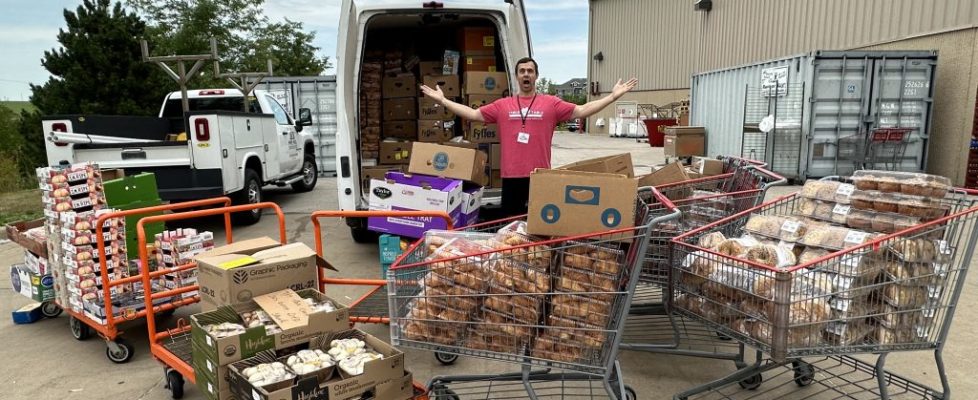
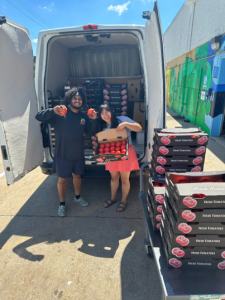
Table to Table’s Food Transportation Rescue program aims to capture good food that may go to waste as a result of being rejected by local food vendors. This can happen for any number of reasons and often has nothing to do with its quality – damaged packaging, mislabeled items, or simply too much of a product are all common reasons that vendors reject shipments even though it’s still perfectly good food. The past two years, T2T staff and volunteers have worked hard to develop this program, maintaining 17 partnerships with food transportation companies and warehouses, and successfully recovering nearly 140,000 lbs. of good food through rejected truckloads. To promote the program, AmeriCorps and volunteers designed and posted flyers in food warehouse porta potties, which has been our most successful outreach effort to date – call that creative marketing!!
Food Rescue Tales
In November we received 35,000 lbs. of distilled water that had been rejected due to 1 damaged jug. Not only can distilled water be drank, but it can be used for medical and cleaning purposes as well – a super unique offering that our partners were thrilled to receive!
This March, we happily accepted a 2,030 lb. donation of milk that was rejected due to a few leaky cartons. Luckily, T2T Dispatcher Ryan Mohwinkle recruited their visiting siblings to help us clean off each carton and distribute them to our partners!
Did that apple you’re eating come from five miles down the road, or is it more well-traveled than you are? Reduce your carbon footprint and benefit your health by choosing local food.
Monthly Topic Overview
Why does choosing local food matter?
“Choosing local food whenever in season and when possible, as often as possible, strengthens a community-based food system,” says Michelle Kenyon, director of Field to Family, an Iowa City-based nonprofit that works to create a healthy and sustainable local food system. “Community food systems enhance the health of our economy, environment, and our population.”
Let’s go in-depth with benefits:
Choosing local food reduces transportation-associated greenhouse gas emissions.
Significant greenhouse gas emissions are associated with food logistics. Most conventional food travels over 1,000 miles to get to us, the consumers. (To put that into perspective, that’s like driving to Boston from Iowa City.) Almost one-fifth of carbon emissions in the food system are from burning fossil fuels to transport (and refrigerate) food via trucks, trains, boats, planes, etc. With a greater distance to travel, there’s also a higher chance of food spoiling or being damaged on its journey, leading to more food waste.
Choosing local food offers fresher, more nutritious options that benefit your health.
Food sourced locally spends much less time in transit from the farm to your plate, which means it loses fewer nutrients before you eat it. Plus, it’s fresher and tastes better. Eating local encourages you to eat with the seasons, learning when certain types of produce are at their peak for quality and taste.
Plus, many local farmers take environmental health into consideration when growing food, using sustainable practices to increase biodiversity and protect pollinators.
“‘Know your farmer, know your food’ is absolutely true, as local farmers are transparent when it comes to their growing philosophies,” Kenyon says. “Those who implement growing practices that are committed to improving soil, water, and air health are upfront about it.”
Choosing local food strengthens our food system.
When you purchase local food, you’re supporting local farming, processing, and distribution jobs, keeping your dollars in our local economy. The more of our local dollars that go into local food, the more local food is grown in our region. Those dollars invest in the future of our food supply.
In addition to food, agritourism supports our community’s economy. Participating in local activities like farm to table dinners, goat yoga, and apple picking ultimately support folks living and working in our communities.
How can I access local food in Johnson County?
Now that you understand the difference that eating local can make, let’s delve into how you can access local foods in Johnson County. Our community is host to a lot of quality local food options, including these listed:
Farmers Markets offer seasonal local foods and goods sold by our neighbors. Markets typically run May-October. Check out this list of Johnson County Farmers Markets.
If you’re looking to order local foods online, Field to Family offers an Online Market from April thru December.
Many local farms offer community-supported agriculture (CSA) shares for purchase. Vegetable shares are seasonal and subscription-based. Find a local CSA with this guide to Iowa CSA farms.
Want to grow your own produce? You can’t get more local than that!
Try your hand at gardening in your backyard; or, if your space is limited, container gardens kept on patios, steps, or in windows are excellent for growing your own tomatoes, peppers, eggplants, lettuces, strawberries, and herbs.
Plus: share your bounty and grow an extra row to donate to Table to Table! Drop your donations off at the Table to Table office in Pepperwood Plaza, 1049 US-6 E, Iowa City on weekdays or Saturday mornings.
Shop local at the grocery store. Wherever you shop, check labels when you’re shopping to see where the food you’re planning to purchase came from.
Next time you go to the grocery store, pick out three produce items and check the labels. Where are the items from? Are they local or from a faraway place?
This month, we are partnering with Food Waste Prevention Week, happening April 7-13, 2025, to shine light on the importance of food waste reduction and to share some easy tips on how you can reduce food waste.
The party continues through all of April as we celebrate our Love Food, Fight Waste program’s three year anniversary this month! Celebrate with us by taking action to reduce food waste.
Here are some ways to make a difference:
Take our 10 Actions Challenge which offers a range of activities to participate in. Compete with your friend, family member, or neighbor this month and see who can score the most points. Click here for a link to the scorecard.
Get prepared for this year’s local produce season:
Farmers markets offer seasonal local foods and goods sold by our neighbors. Markets typically run May-October. Check out thislist of Johnson County Farmers Markets.
If you’re looking to order local foods online, Field to Family offers anonline farmers market.
Many local farms offer community-supported agriculture (CSA) shares for purchase. Vegetable shares are seasonal and subscription-based. Find a local CSA with this guide to Iowa CSA farms.
Want to grow your own produce? You can’t get more local than that!
Try your hand at gardening in your backyard; or, if your space is limited, container gardenskept on patios, steps, or in windows are excellent for growing your own tomatoes, peppers, eggplants, lettuces, strawberries, and herbs.
Share your bounty and grow an extra row to donate to Table to Table! Drop your donations off at the Table to Table office in Pepperwood Plaza, 1049 US-6 E, Iowa City on weekdays or Saturday mornings.
Get involved with your community! Volunteer or donate to the organizations who are reducing hunger through food rescue.
Educate yourself on local volunteer opportunities or consider donating food and personal care items. Here are just a few wish lists from some of our partner organizations:
According to the 2022 Iowa Statewide Material Characterization Study conducted by the Iowa Department of Natural Resources, approximately 20.4% of what ends up in the Iowa City Landfill is food waste. In 2022, the Iowa City Landfill properly landfilled 130,109.46 tons of garbage from our service area – Johnson County, Kalona, and Riverside. Of that, about 26,542 tons was food waste.
Why do we want to reduce food waste and keep food out of the landfill?
When food is wasted, it wastes all the resources that went into growing, manufacturing, distributing, and transporting that food. At the landfill, once garbage is compacted into place by trained Landfill Operators, there is no air (oxygen) or light in a landfill hole. This is the perfect environment for methane, a very potent greenhouse gas, to be produced in the absence of oxygen and in the presence of so many organic materials (food waste). One of the best things each of us can do to take climate action is to reduce food waste.
A great alternative for food waste disposal is composting. While we encourage good, edible food to be eaten as the first priority, we will always have the inevitable banana peels, eggshells, and coffee grounds that we want to responsibly dispose of. Composting is a great option for those items! For a deep dive into composting, check out this deep dive into composting.
Who is recovering food in Johnson County?
T2T saw up to a 60% increase in the amount of food rescued annually between 2017 and 2022. And that growth has continued! Since 2022, Table to Table has continued to increase the amount of food rescued throughout Johnson County.
Table to Table manages a complex food rescue network throughout Johnson County involving more than 100 food donors and nearly 50 recipient organizations. Food donors include area stores, warehouses, processors, restaurants, farms, markets, and gardeners that donate their unsold or excess food to Table to Table. T2T volunteers deliver this food directly to organizations that are serving our neighbors in need so this food reaches people as quickly as possible. Our partners report that most T2T food makes it to our neighbors’ homes within 6 hours of our daily deliveries. These organizations include food pantries, shelters, hot meal sites, and youth programs that connect rescued food to our neighbors. Ultimately, people rescue food by eating it: using it for its intended purpose!
In 2024, T2T recovered 2.7 million pounds of food, redirecting it throughout our community where it was needed and feeding more than 22,000 people. More than half of this food is produce, protein, and dairy. Recall that some of the most commonly wasted foods are produce, dairy, and bread. T2T is making a huge local impact in these most-wasted categories!
T2T rescued food provides about half the total food that the three largest local pantries distribute. Plus, recovered food helps provide more options, including vegan and gluten free foods and a variety of produce grown locally.
Activities
Help us rescue food in our community! Table to Table is currently in need of fleet and facilities volunteers to help prep vans for food rescue routes, route substitutes for Saturday mornings, and we have a few weekly route positions available if you are looking for a routine volunteering gig. We will also be looking for volunteers to help harvest veggies in farm fields this summer! We have an amazing volunteer network, and we would love for you to join us! Visit table2table.org/volunteers, email volunteer@table2table.org, or call 319-337-3400 for more information
Educate yourself on local options to donate extra food and personal care items. Here are just a few wish lists from organizations serving our neighbors:
You may also bring items (dry goods, garden produce, pet food, and hygiene products) to Table to Table to deliver throughout the local hunger relief network.
Happy New Year! Make food waste reduction a part of your New Year’s resolutions!
Follow one or more of these five tips to have a meaningful impact this year. Reducing food waste saves you money, preserves landfill space, reduces greenhouse gas emissions, and more!
1. Make a shopping list
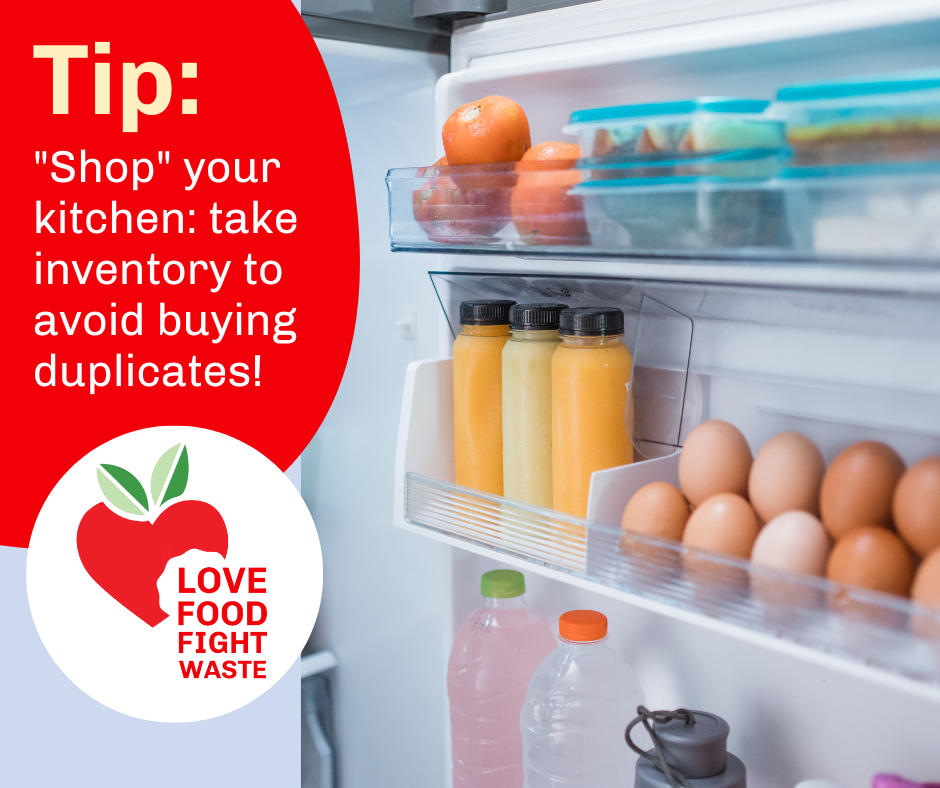
Before heading to the grocery store, shop your kitchen. Inventory which food items you already have in the refrigerator and pantry to avoid buying duplicates.
What meals or dishes do you plan to make this week? Identify which ingredients you will need and add them to the list.
Package food in portion sizes before freezing. This makes it super easy to take out of the freezer and heat up for a quick meal later!
3. Save the bread!
Storing your store-bought bread in the fridge extends its life up to 2 weeks and preserves quality. (Source: USDA)
Freeze bread that you won’t use right away. Frozen bread will keep for up to 3 months. (Source: USDA)
Get creative with stale bread! Make croutons, breadcrumbs, French toast, bread pudding, stuffing, and more with stale bread. Here are a few sources for recipes:
Did you know that the dates stamped on food are not safety dates? The only food item where the date should be strictly followed is baby formula. Except for baby formula, most dates are indicators of best flavor and peak quality.
Before tossing a food item that is past the “best by” date…
Look at it – do you notice any of these characteristics indicating it may be past use or spoiled? (Source: Taste of Home)
Moldy
Slimy film
Pale, greenish tint, or discoloration
Texture – produce wrinkled or caving in, or pasta congealed
Smell it – does it smell funky?
Rancid foods can have a similar appearance as when they were bought but smell sour. (Source: Ricardo Cuisine)
If you can’t tell by smell and sight, a last resort can be giving it a small taste.
Foods that have gone rancid will usually have a sour or acidic flavor. (Source: Healthline)
Pick up our magnet all about how long food lasts past stamped dates at these locations during open hours:
Marquis Heard joined the Table to Table team for a 2023 Summer term as our Produce Stand Coordinator and loved it so much that he chose to stay on for a full 11 month Green Iowa service term, completing a total of 14 months of service with us. He used expertly crafted media relations to significantly raise the profile of T2T’s environmental work and dedicated much of his time to developing and refining our Overages, Shortages, and Damages (OSD) program that focuses on rescuing food from rejected truckloads in the area.
Marquis took the time to reflect on his experiences at Table to Table upon completing his final service term.
I began my first AmeriCorps service term with Table to Table in June 2023. During my three month summer term, I was T2T’s Free Produce Stand Coordinator and was responsible for scheduling and leading over 30 free produce stands hosted in Iowa City, Coralville, and North Liberty. To me, the most memorable aspect of T2T’s free produce stands was the level of community engagement that existed at them. At each stand, it was great to see people connect around produce and share recipes and dishes with each other. It was also nice to see folks stop by the stand and not only take produce for their family, but for neighbors, friends, and others. I feel as if there’s real connection in sharing food with those around you, and that connection goes much deeper than just nutrition. Before I knew it, an entire summer had passed and I had assisted in distributing over 23,000 lbs of produce through the free produce stands. My term was wrapping up around September, and the last thing I wanted to do was move on from Table to Table right as I truly understood a lot of the intricacies that went into T2T and its mission. Fortunately for me, an 11 month Green Iowa AmeriCorps position was available and offered to me which I gladly accepted.
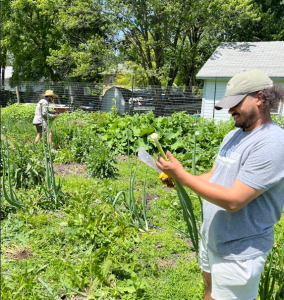
As a Green Iowa AmeriCorps member, my role switched from coordinating free produce stands to wrapping up the gleaning season, and also assisting with developing Table to Table’s OS&D program. Gleaning is the act of harvesting produce that is excess, and may go to waste in the fields otherwise. Table to Table has a strong connection with over 20 local farms and gardens, and these growers contact T2T when there’s produce for the Gleaning Coordinator to arrange to harvest. It was great to see the other side of T2T’s local produce recovery program, to go from distributing the produce at the stands to harvesting and collecting it felt like a well rounded experience for me. I was also able to gain knowledge on how some of the fruits and vegetables I eat everyday are grown, which is something I didn’t take the time to consider prior to my service term. Additionally, I enjoyed forming relationships with all of the local growers, and to see their excitement and passion for growing food, and the amazing volunteers I met on gleans. Table to Table’s local produce recovery is so special because it provides a home for excess produce that growers put so much time and effort into, and that home is directly in the communities it’s grown in.
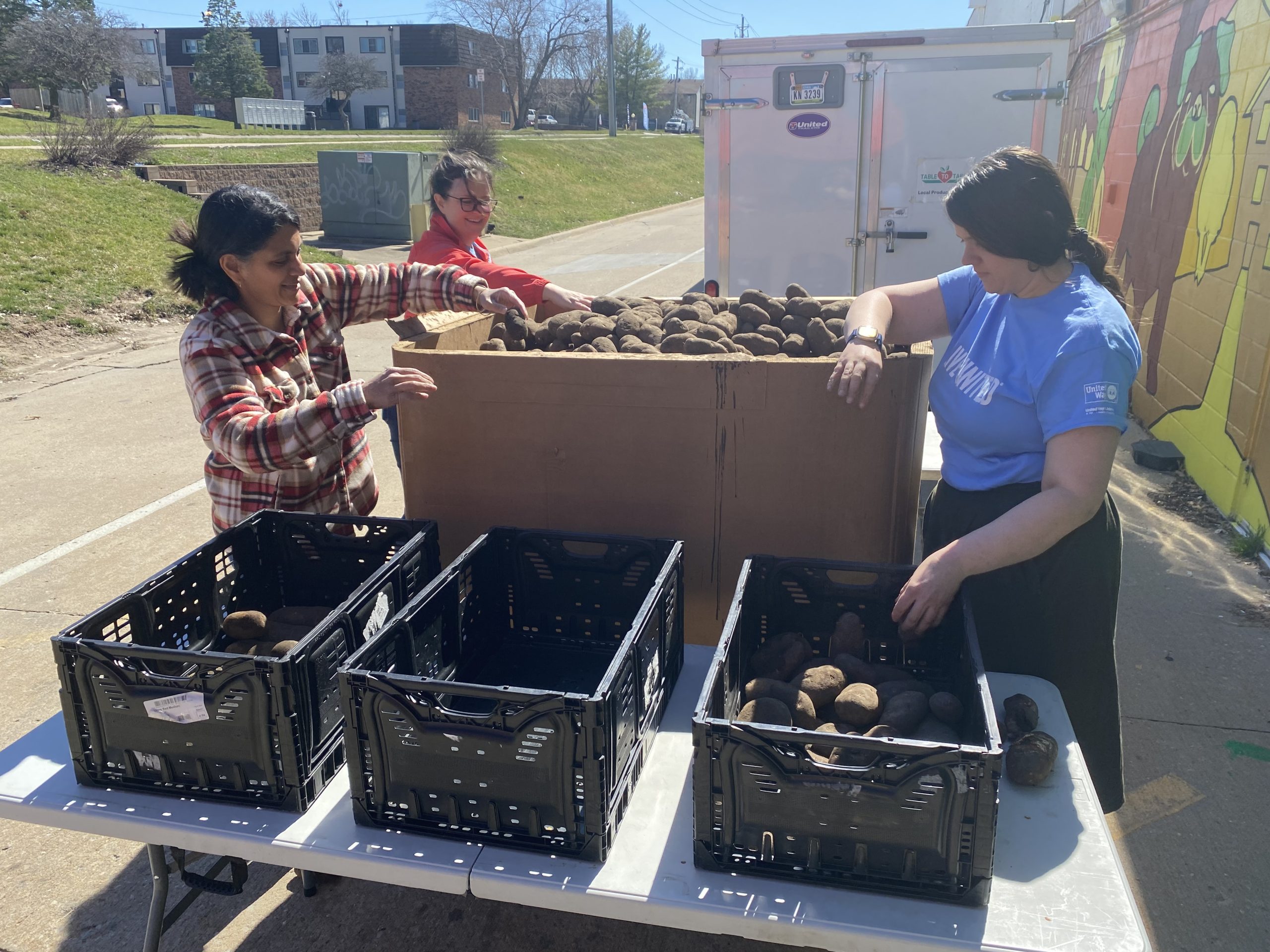
As mentioned earlier, I also assisted in developing T2T’s growing OS&D program. Similar to local produce recovery, the Overages, Shortages, and Damages (OS&D) program finds a home for food that gets rejected within the trucking/transportation industry. These rejections can happen for many reasons, the truck brought too much of a product, the wrong product, or a pallet in the shipment was partially damaged so the whole load was rejected. Assisting in developing this program was a really unique experience since I was given the opportunity to start at almost square one, and was able to see the thoughts and considerations that go into creating a new food rescue program. I really appreciated the time and consideration that the OS&D team, and the T2T staff as a whole, put into explaining to me the broader aspects of how decisions within a program are made. Through OS&D initiatives, I assisted T2T in accepting 40,000 lbs of potatoes from a farm in Canada, 30,000 lbs of Rice-A-Roni from a local trucking company, and 16 other rejected loads from semi truck drivers. Overall, the program collected over 82,000 lbs of food that would have ended up in a landfill otherwise.
I’m now wrapping up my 14th month serving at Table to Table, and would sign up for another term in a heartbeat if I were able to. In my time at Table to Table, I feel as if I’ve gained countless lifelong experiences, both professionally and personally. T2T truly invests in their AmeriCorps members. Food rescue is ever changing, unpredictable, and sometimes hectic, yet staff still take the time to give even the three month members the best experience possible. It was more than a pleasure to be a part of the T2T team.
We are so thankful for the immeasurable impact Marquis had at T2T during his time with us!
During this merry season, you can reduce food waste with these simple tips before, during, and after your holiday gatherings.
SHOP TO REDUCE FOOD WASTE
Before you head to the store…
Shop your kitchen. Inventory which food items you already have in the refrigerator and pantry to avoid buying duplicates.
Make a list. What meals or dishes do you plan to make this week? Identify which ingredients you will need and add them to the list.
Looking for list-making resources? Check out the many available grocery list phone apps, such as AnyList, Mealime, or OurGroceries. If you prefer a paper list, check out this shopping list template.
Eat a snack or meal. It is important to avoid grocery shopping when hungry as you are more susceptible to impulse purchases and over-buying.
Once at the store…
Think realistically about items on sale, such as “10 for $5”. It may seem like a tempting deal, but will you actually be able to consume ten? If not, you could end up with food waste, which results in money wasted.
Control quantity. To have better control of quantity when purchasing produce items, opt for unpackaged fresh fruits and vegetables. (Added climate benefit: you reduce packaging, too!)
CREATIVE WAYS TO KEEP YOUR FOOD FRESH
Milk:
Avoid placing milk in your fridge door, as the frequent temperature fluctuation from opening the fridge can make the milk go bad faster.
Organize food to help you keep track of food that needs to be eaten soon. Use this “Eat Me First” sign to dedicate a section in your fridge for food that is about to go bad and needs to be eaten first.
Mark opened food containers and leftovers with a date of when it was opened or prepared to help keep track of how soon items need to be used up.
Be intentional and efficient when you open the fridge door, and make sure it is completely closed when you’re done perusing the fridge. This reduces how much cold air escapes, which means less energy demand to re-cool the fridge.
Dignity: We believe that people and food have inherent value and deserve to be treated with respect. About half the food we collect is “short-dated”, which does NOT mean bad or old. Our volunteers and those at our food access partners put a lot of effort into ensuring the food quality is good before it hits the shelves. As part of this process, volunteers identified a reduction in quality of produce from a grocer on their route. The T2T team put together visuals that demonstrated preferred quality for different types of produce and shared it with this store (and others). As a result, this partner has become one of our highest performing grocery partners in quality AND amount of produce!
Love: We show love for our neighbors through food and none demonstrates this more clearly than our friend and colleague José who works in the produce department of one of our grocery partners. Sometimes, food for donation is pulled from the shelves after our pick up time. With limited space, it’s likely the store would need to toss it before the next pick up. José couldn’t bear to see it go to waste and began delivering it directly to T2T on his lunch break. That’s the kind of dedication and love for community we need!
Collaboration: This year, we saw the effects of a strong network in several ways.
When Coralville Pantry’s cooler and freezer went down, T2T offered up extra cold storage space that saved thousands of dollars worth of food and kept pantry doors open.
CommUnity Food Bank staff used their equipment to unload several large scale deliveries to T2T from trucking companies. This benefited not only their clients, but helped T2T share the bounty with partners across the county.
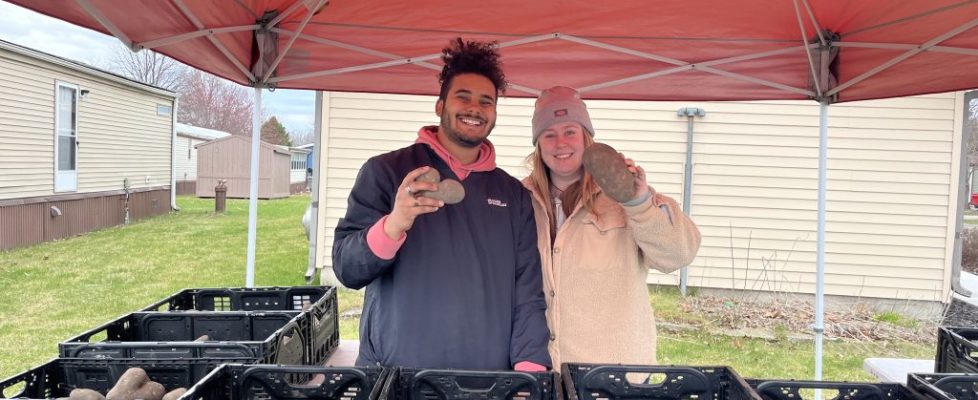
So many of our partners stepped up to distribute more than 40,000 pounds of potatoes, including partners like Open Heartland who set up special distribution hours to accommodate the opportunity.
Using our big truck on a regular weekly route, T2T transported 266,000 pounds of food from HACAP Food Reservoir to CommUnity Food Bank.
Appreciation: On a route last year, a volunteer learned that one of our biggest partners had food we weren’t receiving because the donor didn’t think we had the capacity. T2T staff leapt into action, set up meetings with the donor, and restructured several routes. Volunteers weathered significant changes to their routes and food access partners adjusted their volunteer schedules to accept the influx of food. All of this effort resulted in a 72% increase in food from that donor! An impossibility without volunteers, partners, or our talented team.
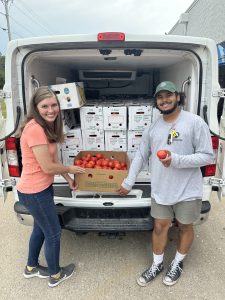
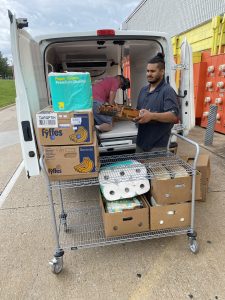
When you picture the mission of T2T – do you see a volunteer walking the aisles of a grocery store or loading up in the parking lot? A cargo van packed to the brim with boxes of food, or a T2T vehicle making deliveries around town? This year, more than 100 volunteers each week dedicated 8,300 hours to our route based food rescue program.
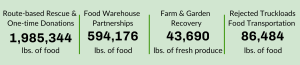
Routes represent 66% of the food we recover, but did you know that nearly 1 million pounds of food comes from our expanded food rescue initiatives? This includes harvesting from local farms, gardeners, food processors, warehouses, and even the food transportation industry. By expanding our team and building new partnerships, we said “yes” to more food rescue opportunities than ever before. Take a look below at the results of a few key initiatives.


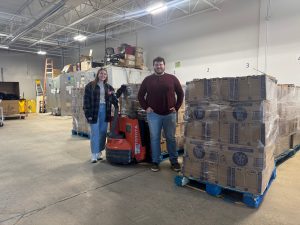 In November we received 35,000 lbs. of distilled water that had been rejected due to 1 damaged jug. Not only can distilled water be drank, but it can be used for medical and cleaning purposes as well – a super unique offering that our partners were thrilled to receive!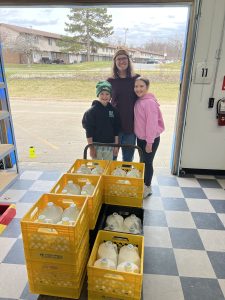





 volunteers and those at our food access partners put a lot of effort into ensuring the food quality is good before it hits the shelves. As part of this process, volunteers identified a reductio